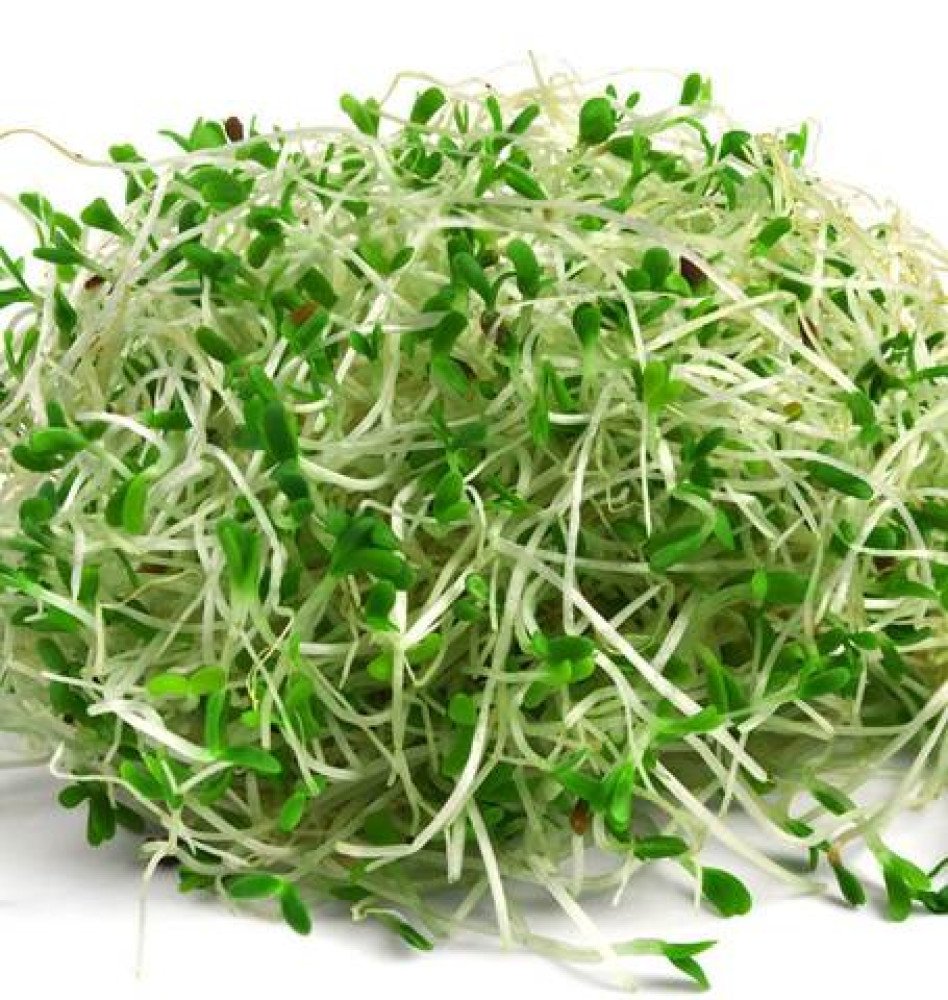
1. The World Tour That Started in a Mountain Valley
Most people meet alfalfa as a handful of delicate green sprouts tucked into a sandwich or salad: But behind those tiny leaves is a story that stretches back thousands of years, across deserts, empires, and kitchens.
As part of the grasses series, today we tackle this gem. In the high, dry hills of what is now Iran, about 6,000 years ago. A farmer notices a clump of deep-green leaves that stay lush long after the wheat has turned brittle. He pulls up a root that snakes two meters down and realizes this plant laughs at drought.
He tosses a handful to his horses, they shine, run faster, and word spreads. By 1300 BCE, the Sumerians are already writing “al-?u-bi-tum” on clay tablets, horse fodder. Persian kings feed it to cavalry heading for Greece. Greek soldiers carry the seeds home; Romans carry them west. Arab traders ferry them across North Africa and Spain. Everywhere it lands, people rename it Median grass, Lucerne, al-fa?fa?a, finally, alfalfa.
Fast-forward to the 1500s: Spanish ships sail from Seville, barrels of seed packed between cannonballs and gold. Alfalfa leaps from Mexico to Peru, crosses the Andes, and gallops north with wagon trains into Utah. By the Gold Rush, California miners are planting it to keep their ponies strong.
By the early 1900s, seed companies advertised alfalfa alongside sewing machines and miracle tonics. Australia planted it to anchor dunes, the Soviets sowed it in Siberia and today, it grows on every continent except Antarctica. Not bad for a humble Persian weed that conquered the world.
2. Africa’s Quiet Love Affair with Alfalfa
Hollywood may picture Africa as an endless savanna, but across the continent, farmers have long grown lush green lucerne along the Nile Delta, Maghreb’s plains, and Ethiopia’s high plateaux.
Ancient Egypt:
Walk through the tomb murals of Luxor (around 1200 BCE), and you’ll spot horses munching clover-like grass. Botanists believe that was alfalfa, imported to fatten Pharaoh’s chariot teams.
The Maghreb:
When Carthage ruled the Mediterranean, merchants sold dried alfalfa cakes as ship feed. Centuries later, Moorish farmers in Spain praised “alfalfa de Africa”, calling it a crop that never failed if water flowed. After their exile, they carried seeds back to Morocco, where Berber herders still feed it to their dancing Barbary horses.
Africa’s Modern Alfalfa Journey
The African alfalfa story is a hidden triumph of resilience, adaptation, and quiet innovation.
In East and Central Africa, it began with Italian prisoners of war who, during the 1940s, sowed a few handfuls of “lucerne” seed around irrigation ditches in Kenya’s Rift Valley. Dairy farmers noticed how the deep-rooted plants stayed green through the dusty dry season.
By the 1960s, Israeli agronomists were helping co-operatives near Naivasha and Ethiopia’s Awash basin expand alfalfa circles under sprinklers. Tanzania’s state dairies followed in the 1980s, and today, Kenya’s Mt. Kenya region, Ethiopia’s Upper Awash, and Uganda’s cattle corridor all cube and export alfalfa to the Gulf. Smallholder farmers intercrop it with napier grass to feed improved dairy cows that sustain school milk programmes.
In Southern Africa, the story started in the 1890s with Cape colonial officers who imported Australian “Hunter River” seed to fatten cavalry horses. Lucerne soon became the backbone of irrigation schemes along the Orange and Vaal rivers, and by the 1950s, breeders at the University of Natal had released winter-hardy cultivars that allowed maize farmers to rotate fields and cut fertiliser costs.
Across North Africa, Moorish Spain reintroduced alfalfa to Morocco and Algeria in the early 1900s. French colonial estates in the Mitidja plain turned it into “green gold,” fueling dairy towns like Blida. Today, Egyptian and Sudanese growers in the Nile Delta and Gezira Scheme plant salt-tolerant varieties to feed buffalo and export compressed cubes to Saudi Arabia.
West Africa joined later, Nigeria’s National Animal Production Research Institute (NAPRI) began multiplying seed in the 1970s. Now, pilot plots in Plateau and Kaduna, and irrigated pockets in northern Ghana and southern Mali, supply fodder for peri-urban dairies producing yoghurt for booming city markets.
From Pharaoh’s chariots to export hubs, Africa’s relationship with alfalfa shows the continent’s quiet genius for turning global crops into local success stories.
3. Grandma’s Tonic Meets the Chemist’s Test Tube
For centuries, people only ate alfalfa when food was scarce, yet every traditional healer knew its power.
What Grandma Knew
China: “Mu-su” tea eased swelling and kidney stones.
India: Powdered leaves stirred into warm milk helped new mothers regain strength.
Spain & Mexico: “Té de alfalfa” soothed stiff joints and hormonal imbalance.
Native North America: Sprouts chewed in spring “to clean the blood.”
What Science Says Now
Cholesterol sponge: Saponins help sweep out LDL (“bad”) cholesterol.
Antioxidant mop: Chlorophyll and flavonoids neutralize free radicals.
Gentle diuretic: Alfalfa tea eases water retention naturally.
Phyto-oestrogen hug: Mild plant hormones may soften menopause symptoms.
Blood-sugar buffer: Studies show alfalfa may flatten post-meal spikes.
?? Caution:
Alfalfa seeds contain L-canavanine, which in large doses may trigger autoimmune issues like lupus. Stick to small amounts if you have immune disorders. Wash or blanch sprouts, they can occasionally carry bacteria.
4. From Manger to Table: How Alfalfa Ended Up on Your Avocado Toast
No one wants to chew Cleopatra’s horse feed, but the baby sprouts? That’s another story.
Grow Your Own Sprouts
Soak 2 tablespoons of seed overnight.
Rinse and drain twice a day.
In 5 days, you’ll have a jar full of crisp, juicy greens ready for salads.
Around the World
California delis: Turkey, avocado, Swiss, tomato, mayo, and a handful of sprouts.
Australia & New Zealand: Salad rolls with carrot, beetroot, and alfalfa crunch.
Japan: Rolled in rice paper with daikon and shiso.
India: Mixed into yoghurt raita or paneer wraps.
Middle East: Scattered over hummus and fattoush.
Modern Twists
Smoothies, microgreens, protein bars, even natural colouring for mint ice cream, alfalfa keeps reinventing itself.
Quick Recipe: Sprout & Strawberry Summer Bowl
Mix alfalfa sprouts, spinach, strawberries, avocado, sunflower seeds, and a citrus-honey dressing. Ten minutes, one glowing bowl.
5. The Takeaway
Alfalfa is the plant version of the underdog who made it big, a scrappy mountain weed that learned to dig deep, team up with bacteria, and feed everything from Pharaoh’s horses to 21st-century vegans.
Africa’s story with alfalfa is one of quiet strength, of farmers who turned curiosity into opportunity and built a green bridge between tradition and trade.
So next time you spot a tangle of green on your sandwich, give a nod to that ancient Persian farmer. His handful of seeds didn’t just feed empires, it found its way onto your breakfast.
Add your reply
Replies