For this one, let’s begin somewhere familiar.
Not in a lab. Not in a juice bar.
But in a field.
Somewhere in the Fertile Crescent, nearly 10,000 years ago, a gatherer bends down and pulls at a young barley plant. Not the grain we recognize today, but the tender green blades. She tastes it.
It is unexpectedly sweet.
Not the dry, fibrous bitterness of most grasses, but something softer, almost alive with possibility.
She keeps the seeds.
And in that quiet, unrecorded moment, one of humanity’s oldest relationships with food begins.
By the time civilizations begin to write things down, barley is already part of daily life.
In ancient Mesopotamia, clay tablets record mixtures of barley shoots and honey used to restore strength. Not just nourishment, but something closer to healing.
If you pause here for a second, you begin to see a pattern.
Long before we called anything a “superfood,” people were already paying attention to what made them feel stronger, lighter, more alive.
Barley grass was one of those things.
Across ancient civilizations, barley did more than feed—it adapted.
In Egypt, tomb paintings show workers harvesting barley while others sip a greenish drink. It’s not difficult to imagine what it was: crushed young barley, blended with whatever sweetness was available. A primitive smoothie, perhaps—but a meaningful one.
In Greece and Rome, naturalists like Pliny the Elder wrote about barley greens calming digestion. Roman gladiators, sustained largely on barley, earned the name hordearii—“barley men.”
In China, early medicinal texts recorded barley sprouts as cooling, restorative, supportive for mothers.
And in medieval Europe, when crops failed and survival became urgent, people turned to barley again—sometimes even baking bread from its greens.
Barley was not glamorous.
But it was reliable.
And that, in many ways, mattered more.
If barley’s global story is about survival, its African story is about adaptation.
Because here, it did not arrive as a cultural staple.
It became one.
Highlands, Valleys, and Everyday Use
In the Ethiopian highlands, barley is deeply woven into life. Not just as grain, but as a plant used at different stages of growth. Young barley is harvested, cooked simply, and eaten alongside injera—less as a novelty, more as part of a rhythm.
In Kenya, barley entered through colonial systems in the early 20th century, largely tied to brewing.
But as is often the case, communities reshaped it.
By the 1950s, women in regions like Timau had already begun using young barley leaves in simple, practical ways—especially for children who needed nourishment. There were no labels, no packaging, no claims.
Just observation and use.
Today, that same plant appears in Nairobi juice bars as a “barley shot,” often blended with tangawizi or pineapple.
Different context. Same instinct.
Across the Continent
In Southern Africa, barley moved from animal feed to human use over time. Smallholder farmers began drying the leaves, packaging them, and selling them locally. It became something else entirely—not just food, but income.
In North Africa, the story stretches even further back. Ancient Egyptian texts referenced young barley for strength. Today, it is grown, processed, and exported.
And in parts of West Africa, particularly cooler regions, barley is slowly finding its place again—this time through urban demand for green, functional foods.
If there is one thing to take from this, it is this:
Africa does not just adopt crops.
It transforms them.
Now, here’s where things get interesting.
Because what people have always felt about barley grass is now being examined more closely.
Across cultures, the uses were surprisingly consistent:
Something to restore strength
Something to support the body during weakness
Something to bring balance
And slowly, science has started asking: why?
What We Are Beginning to Understand
Barley grass is rich in chlorophyll, the pigment that gives it that deep green colour. Structurally, it resembles haemoglobin in some ways, which may explain why it has long been associated with blood support.
It also contains antioxidants—compounds that help the body manage stress at a cellular level.
Some early studies suggest:
Support in regulating blood sugar
A role in managing cholesterol
Anti-inflammatory effects
But it is important to say this clearly:
Barley grass is not magic.
It is simply consistent.
And sometimes, that is more powerful.
What fascinates me most about barley grass is not its past.
It is its return.
Because after centuries of quiet use, it has reappeared in a completely different space.
Juice bars.
Health shops.
Urban kitchens.
What used to be:
chewed in fields
cooked in simple meals
used without ceremony
is now:
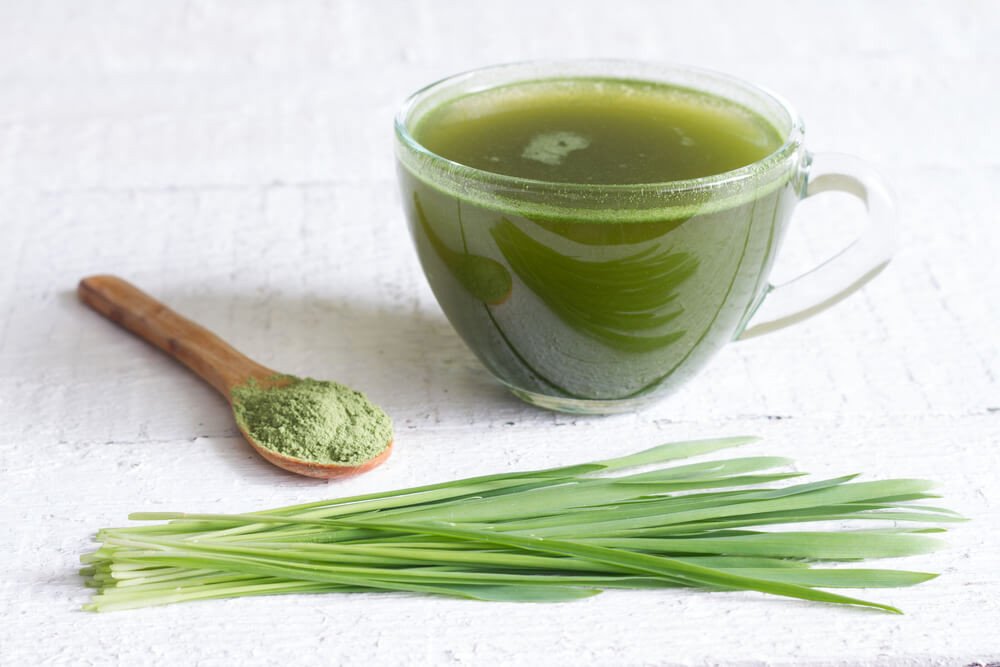
blended into smoothies
packaged into powders
sold as part of a wellness lifestyle
In cities like Nairobi, Cape Town, and Lagos, barley grass now sits alongside ingredients like baobab and moringa.
And yet, if you look closely, the intention hasn’t changed.
People are still looking for the same thing:
Energy.
Balance.
Strength.
So how do you actually use barley grass today?
Not in theory. In real life.
You keep it simple.
A spoonful of powder in juice.
A small addition to a smoothie.
A quiet mix into uji.
Nothing complicated.
Because the power of barley grass has never been in how fancy it is.
It has always been in how easily it fits into everyday life.
And if you are curious enough, you can grow it yourself.
A handful of grains.
A bit of water.
A few days of patience.
And suddenly, something ancient is growing right in your kitchen.
Barley grass is not loud.
It does not demand attention like some of the other grains we have explored.
But it has been there—quietly, consistently—moving through time, through cultures, through kitchens.
From ancient fields to modern juice bars.
From survival to lifestyle.
From observation to science.
And maybe that is what makes it worth paying attention to.
Not because it is new.
But because it never really left.
Add your reply
Replies